Is there a fruit or vegetable you love so much that you’d eat it all the time, no matter if it’s in season or not?
OR
Do you have a growing garden of your own which means having the vegetable in abundance but not a big family to finish it within the season?
You can save it for use later. Yes!
But how exactly is that possible? By freezing it!
How to Freeze Butternut Squash?
The process is easy peasy. Follow the steps one by one to freeze your butternut (both raw and cooked).
Steps to Freeze Raw Butternut Squash:
- The first and foremost thing is to peel the butternut.
- Later, you’ll need to carefully remove the seeds. Well, don’t damage its shape and appearance while removing the seeds.
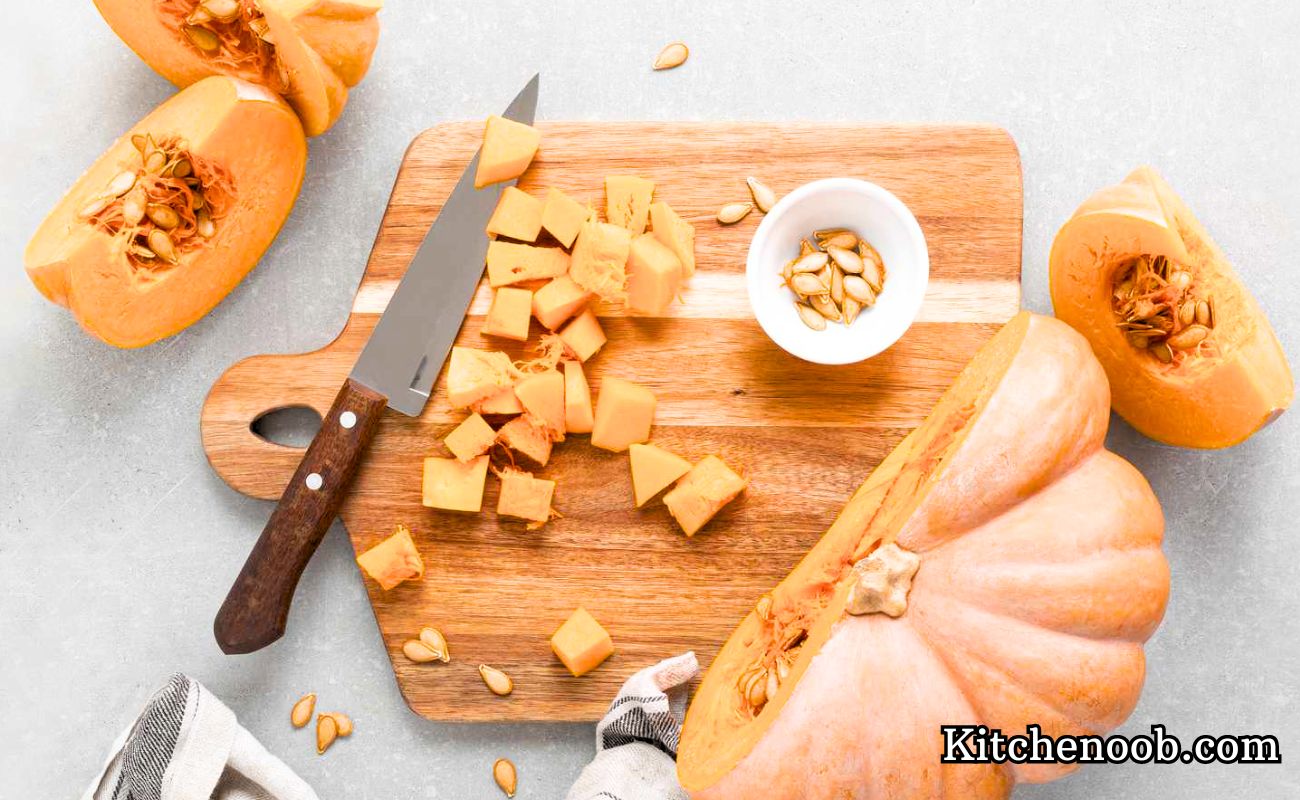
- For storing raw butternut squash, the best approach is to cut it into small pieces and then freeze it.
- If so, make sure to cut the pieces in equal sizes. f you cut them into uneven sizes, freezing and storing will be harder.
- Therefore, the size should be about or under 1 inch to use it easily in a variety of meals.
- Once you’re done cutting, get some parchment paper or a baking sheet, which you can easily find in stores.
- Spread the freshly cut butternut pieces on the paper on a large tray, leaving a little space between them so they don’t overlap.
- Now place this tray in the freezer and wait for a few hours to let it freeze to the core.
- After this, move the frozen butternut pieces into a freezer bag. There are special plastic freezer bags that you can find in the market to store the stuff for a long time without having it deteriorate. Heavy-duty bags or sturdy containers are the best for storing your butternut squash.
- Don’t fill the freezer bag or container all the way to the top; leave a little space.
- When you need some, take the bag out, grab the amount of butternut pieces you want, and put the rest back in the freezer.
- When you need some, take the bag out, grab the amount of butternut pieces you want, and put the rest back in the freezer. You don’t need to reheat it but just letting it adjust with the room temperature is enough.
Steps to Freeze Cooked Butternut Squash:
- To freeze cooked butternut squash, you have to undergo the same old procedure of peeling and removing the seeds.
- You can pour that purée into an ice cube tray to create fun shapes! It’s a great way to freeze portions for later use or to add a pop of flavor to drinks.
- However, you can store the cooked butternut puree in a bigger tin than the average size of ice cube trays.
- Whatever you use to shape them for freezing, don’t forget to place a parchment paper under it.
- Once it’s frozen, transfer it into a freezer bag.
- Before using them in the dishes, it is necessary to reheat the frozen cooked butternut puree because it will exhibit no taste otherwise.
How to Freeze Spaghetti Squash?
Although you can also freeze uncooked spaghetti squash like butternut squash it is mainly not suitable because it will not make pasta-like strands.
Steps to Cook the Spaghetti Squash:
- Begin with cutting the spaghetti squash with the help of extra sharp knives because its exterior is too hard to be cut easily.
- To make cutting easier, you can soften the spaghetti squash first. Just place it in the oven for a few minutes before cutting it.
- Since it is the kind of fruit that is loaded with lots of marrow inside, the wise approach is to puncture it with the help of a fork or knife to create minor holes in it. This will save your spaghetti squash from nearly exploding when the warmth will work on it.
- This step has to be done if you want to put the spaghetti squash as a whole in the oven. Therefore, if you decide to cut it in half before putting it in the oven, you may skip that puncturing step. But, it is suggested to put this fruit whole in the oven and then cut it.
- After having the fruit cut lengthwise, remove the seeds. Keep them or discard them, it’s your choice but some people roast them to use as an evening snack.
- Apply a thin layer of oil, a little salt, and any other herb that you would want to have the taste of. Place it over parchment paper or baking sheet. This seasoning step can also be done later at the time of unfreezing it.
- Now finally moving it to the oven at 218 degrees for as much as an hour or 45 minutes would do good too if you want a more neutral taste.
- After that, remove it and allow it to cool to room temperature.
Steps to Freeze Cooked Spaghetti Squash:
- To freeze the spaghetti squash, let it cool down first. Let it adjust to the room temperature. It may take half an hour to 1 hour but this is necessary to ensure that the spaghetti strings are completely dry now before you freeze it.
- After this, place the spaghetti squash on a cookie sheet or parchment paper and transfer it to the freezer.
- Later on, after a few hours, you can finally move it to another container where it will rest until finished one by one.
- At the time of eating, take the spaghetti squash out, and warm it in the microwave for a few minutes.
- If you had seasoned it before freezing, the effort is little.
- If it was not seasoned beforehand, layer it with olive oil, salt, and pepper and then put it in the microwave for 1 min. Otherwise, just cover the already seasoned spaghetti squash using the oven-friendly cover.
- After this period, remove the spaghetti squash from the oven and create the strands with the help of a fork. This is ready!
Are spaghetti squash and butternut squash the same things?
Both belong to the same family, but they differ in taste, appearance, texture, and how they look when cooked.However, the similar part is, that both are used highly for freezing when the winter season is ending. Butternut squash tastes better when it is frozen in raw form while the spaghetti squash tastes ideal when it is cooked and then frozen. Health-wise, butternut squash offers more nutritional value than spaghetti squash, but many people love spaghetti squash for its pasta-like strands.
How to Freeze Yellow/Summer Squash?
Steps to Freeze Summer Squash:
- Buy fresh summer squash from the vegetable store, after closely inspecting that they are not deteriorating even a bit.
- Wash them thoroughly and gently scrub off any dirt using your hands or a soft brush.
- Cut them into round slices, aiming for a thickness that’s moderate—between 1 and 2 inches.
- Now is the time to quickly blanch the cut slices of summer squash.
- Take a medium water, fill it with water and put it on the stove.
- Let it come to a boil, then add the summer squash slices. Cook for at least 3 minutes and no more than 5 minutes.
- As the time to remove them approaches, quickly prepare a bowl of iced water. Fill a bowl with cold water and toss in some ice cubes. This makes a cold bath, perfect for cooling drinks or refreshing food quickly!
- After removing the summer squash from the boiling water using a drainer, immediately transfer it to the bowl of ice water.
- After 3 to 4 minutes, discard the iced water, leaving behind only the summer squash slices.
- Spread these evenly over a paper towel to dry the leftover water.
- After that, place them in a freezer bag and transfer to the freezer. Use within 6 to 8 months.
How do you freeze squash without it being mushy?
To save your squash from being mushy and soggy, you need to swear by these 3 important rules.
- When you wash it at the beginning of the process, don’t leave it outside for too long. You need to blanch or cook it promptly, depending on the specific fruit or vegetable.
- Moreover, after you have blanched it and now is the turn to freeze it, make sure to extract all the water out of it. For this, spread it in a tray in the open air.
- Plus it should also not be warm when you put it in the freezer. Make sure the squash is thoroughly cooled down before filling it into the freezer bag.
All these things will collectively protect your squash from being mushy and soggy.
Wrapping Up
Kids, these days, don’t love some of the fruits at all, while there are some other fruits that they want to eat the year around. Since you can not get the seasoned fruits once their season is out, you can certainly freeze these winter fruits for a few more months to serve your taste buds.
Spaghetti squash is a fantastic option for kids, offering a low-carb alternative to traditional pasta while still packing in nutrients. Its unique texture can make meals fun, and it’s a great way to sneak in some veggies! Plus, freezing spaghetti squash is a smart way to preserve it for quick snacks or meals later on. Just cook it, scoop out the strands, and freeze—easy and delicious! Do you have a favorite recipe to use it in?
Leave a Reply