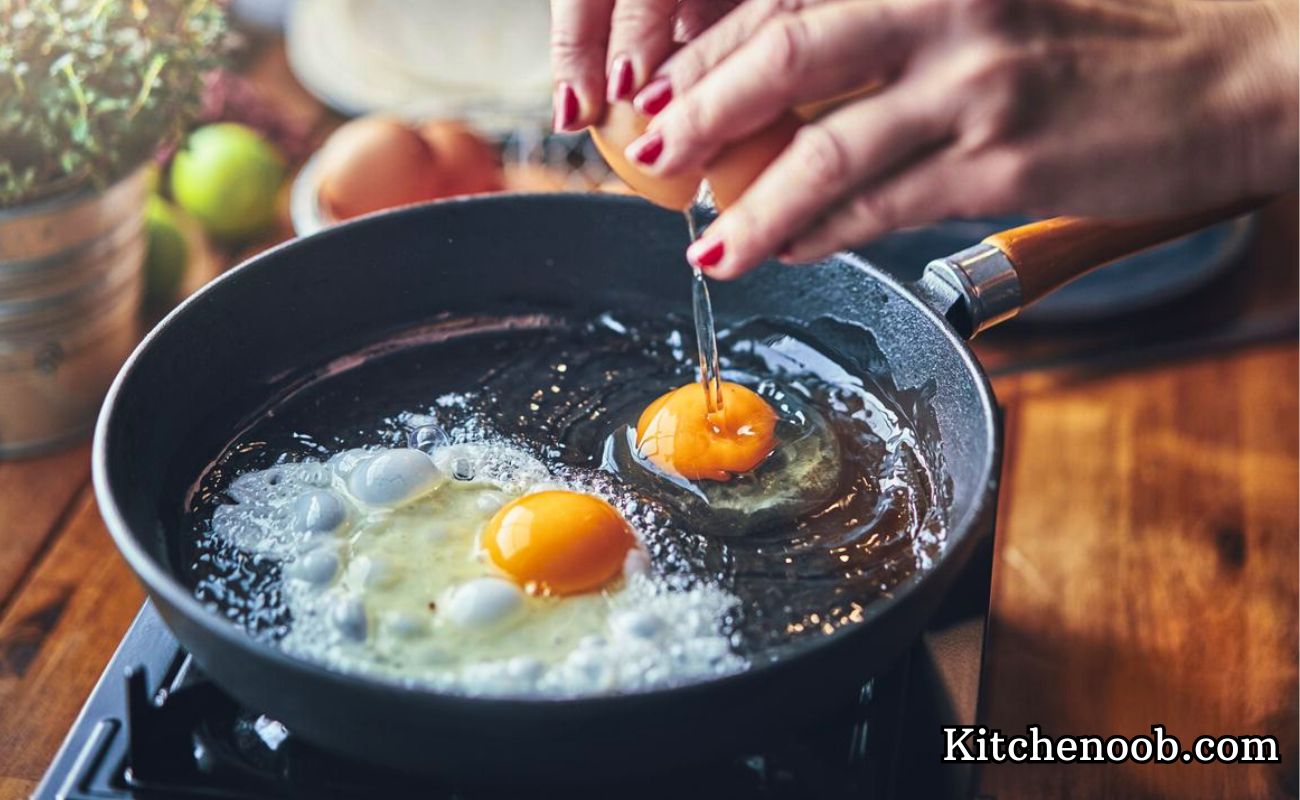
A cast iron skillet is a very important equipment for cooking in the kitchen. Our brief buying guide covers everything you need to know to make an informed decision and elevate your cooking experience!
- Kind of cast iron skillet
- Skillet construction
- Size and weight
Types of Cast iron skillet:
There are two kinds of cast iron skillets;
- the coated or enameled kind
- The uncoated kind
The coated kind does not require seasoning (more on that later) and it can be washed with soap. The coating material that is used on the skillet is not hard-wearing and long-lasting so it is liable to cracking and chipping. Furthermore, you cannot use an open flame or extreme heat for coated ones.
Meanwhile, the uncoated kind is not seasoned. Before using this kind of skillet, you have to season it first. The process calls for packing the pores of the iron surface of the pan with some kind of animal fat or vegetable grease. As soon as the pan has been seasoned, it will now have a smoother, non-stick surface.
However, the item cannot be washed with soap after the process since it will take away the seasoning.
For instance, vintage cast iron skillets typically come uncoated, offering a classic, seasoned surface.
There are some of the cons of an uncoated cast iron skillet. Those are:
- Some individuals opt not to season their cast iron pans, citing potential health benefits associated with cooking on unseasoned surfaces.
- An unseasoned pan means the iron will be able to interact with the food being cooked and this offers the nutrients.
- The food also gets plenty of added flavors.
- An uncoated pan cannot be washed with soap
- It can come into contact with acidic foods.
Construction
The second thing you should consider before buying a cast iron pan is its construction. In construction basic things are:
- To examine the way a skillet was designed and built.
- Consistency of handle
- To check for lid part
Note: *They are not safe for oven and extreme heat because they can get hot to the touch.
Size and WeightThese are made up of heavy material so these pans are expected to be heavier than other pans. And if you are truly concerned with the weight of a skillet you should choose a smaller one.
You will also need to check out a skillet’s thickness since several cast iron models are composed of thicker cast iron material. Thicker ones are heavier but one advantage of it is that it is capable of holding heat even better.
Whether you choose a coated or an uncoated cast iron skillet, a brand new one, or a traditional model, what you will buy will still depend on your preferences and the cooking methods that you will practice the skillet for.
Surely you will not have any problems finding one that fits your style because of the steep availability of the item today.
Read more: 10 Best Cast Iron Skillets
Cast iron skillet Tips before use:
Now you have bought a cast iron pan so here is the second step how to use this pan or what are tips to handle a new pan before cooking. Some of the tips that you should follow are:
-
Wash the pan first
The first step is to wash the new pan in warm, soapy water, and dry it immediately with a soft cloth or paper towel. Do not use harsh cleansers or scrubbers because they disturb its coating.
-
Season your pan before use
Cast iron skillets should be seasoned before using them. Seasoning is a process of building up a fine layer of fat to make the surface nonstick surface. But now many cast iron skillets come “pre-seasoned”, with built-in non-stick coating.
Before use heat your pan gradually
When you heat your pan on medium heat before use it will work best. Keep in mind that when you heat your pan too high its setting and coating will damaged
-
When cooking with acidic foods be aware.
If the cast iron skillet is not thoroughly seasoned, acidic foods like tomatoes, citrus, and beans can be tough on it. As the acid can damage light seasoning and lead to staining metal can damage the taste of food.
-
Never let it stay wet
When you are free from cooking and you have to put it away. You should dry it after washing. Because cast iron is actually a spongy surface and prone to rust. if you don’t dry it thoroughly after washing it, it becomes rusty and ruins the taste of food.
-
Fry and Sear in it.
The best way to keep your seasoning maintained? Just use your pan a lot! The more you fry, sear, or bake in your cast iron skillet, the better the seasoning will develop. Place it carefully when you put it away
If you are placing your cast iron skillet in a cabinet with other cookware, place a sheet of paper towel or soft cloth between it and other cookware to avoid ruining the finish.
-
It should be durable or long-lasting
If your cast iron skillet should be long-lasting and durable you should handle it with proper care, then it can last for decades. Many people believe that it becomes strong with age and usage.
Some so many people are following traditions. There are a lot of myths according to various subjects. Science is developing day by day in all professions, cooking is also one of the professions which is becoming very famous among people. In cooking, there are a lot of types of pots and pans, and there are also some myths and theories related to them.
Cast iron skillet is a very important category of pots and pans which is becoming famous. Following are myths about cast iron skillet:
First myth is
“Cast iron’s heat distribution even.”
Theory: Stabbing steaks and frying potatoes requires even heat distribution below the surface of the pan. Cast iron is great for all these functions, like stabbing steaks,
Testing:
To see just how the pans heats up, a test was designed to give visual evidence of the way heat traveled through the cast iron pan. For testing 1 tablespoon of all-purpose flour is spread in both a cast iron skillet and a traditional stainless steel skillet and heated over moderate heat until the flour starts to brown. As the flour browned in both pans, it essentially represents how each skillet heated up.
Upshot:
After testing now it is time to judge what has happened during testing. As the flour is browned in both pans now it has seen that either it is browned evenly or not.
In a stainless steel pan flour is toasted uniformly which means it has even heat distribution, while in a cast iron skillet, it starts to burn from some parts of the pan and in some parts, it has browned like flour in a stainless steel pan. Heating the pan depends upon the level of heat which is used to heat it.
Cast iron is a poor conductor so when you want to cook any food in a cast iron skillet you should preheat over a burner for at least ten minutes by rotating it every once in a while. There is also an alternative to a burner. You can heat it in the oven for 20-30 minutes. For recipes, you can preheat the pan on the stovetop at medium heat for 3 or 5 minutes. It is found to be the best way to even the distribution of heat.
Second myth is:
If a cast-iron pan gets rusted, it’s ruined
Theory:
Although, cast iron is very durable when it rusts or changes color it means it is time to throw it away and buy a new one.
Testing:
To perform a test to find out if the theory is true, an old cast-iron pan was bought from thrift stores. These are also available in antique shops and flea markets. But it was not in tip-top shape. The most ill-treated skillet was bought; completely faltered of all its dirt, and rust, and its seasoning was ruined by not cleaning properly or by scratching by using metal utensils.
Upshot:
It takes a lot to kill a cast-iron skillet. If your pan’s surface is damaged by its improper use use metal utensils in it while cooking. It means it is time to throw it away. At that time seasoning also gets blemished or the pan starts to rust
Third myth is:
You should never wash a cast iron skillet with soap it can damage its seasoning.
Testing:
Conduct a test to test the theory cast iron pan was washed with soap.
Upshot:
Cast iron is seasoned by heating oils or fats to the point that they form a polymer ( carbon chain molecules) that bonds mechanically to the iron surface and protects the surface from oxidation and rusting.
Fourth myth is:
“Avoid using metal utensils on your cast iron pan, as they can scratch and damage the surface. ”
Theory:
The seasoning in cast iron pans is subtle and can easily be disturbed if you use metal. Use wood or nylon utensils.
Testing:
To test the theory, food was cooked in a cast iron pan for conducting tests, and metal utensils were used while cooking.
Upshot:
The seasoning in cast iron is remarkably delicate and subtle. It can be damaged very easily. Seasoning is actually chemically bonding to the metal. It can scrape away with metal utensils, and unless you’re actually extracting out the surface of the metal, you should be able to continue cooking in it without any issue.
Leave a Reply