We’re living in a technology-driven era. All of our typical day-to-day tasks are driven by technology. With the rise of cooking blogs, Pinterest, and online shopping, finding new recipes and buying your dream cookware has become much easier.
The technology has also familiarized home chefs with new and innovative cookware. One fine example is the Dutch oven. These heavy, durable, and versatile cooking pots look very similar to traditional pots, but it is exceptionally versatile than those traditional ones. If you’re not familiar with this cookware, this guide is for you. It covers everything you need to know before buying and using a Dutch oven.
What is a Dutch oven?
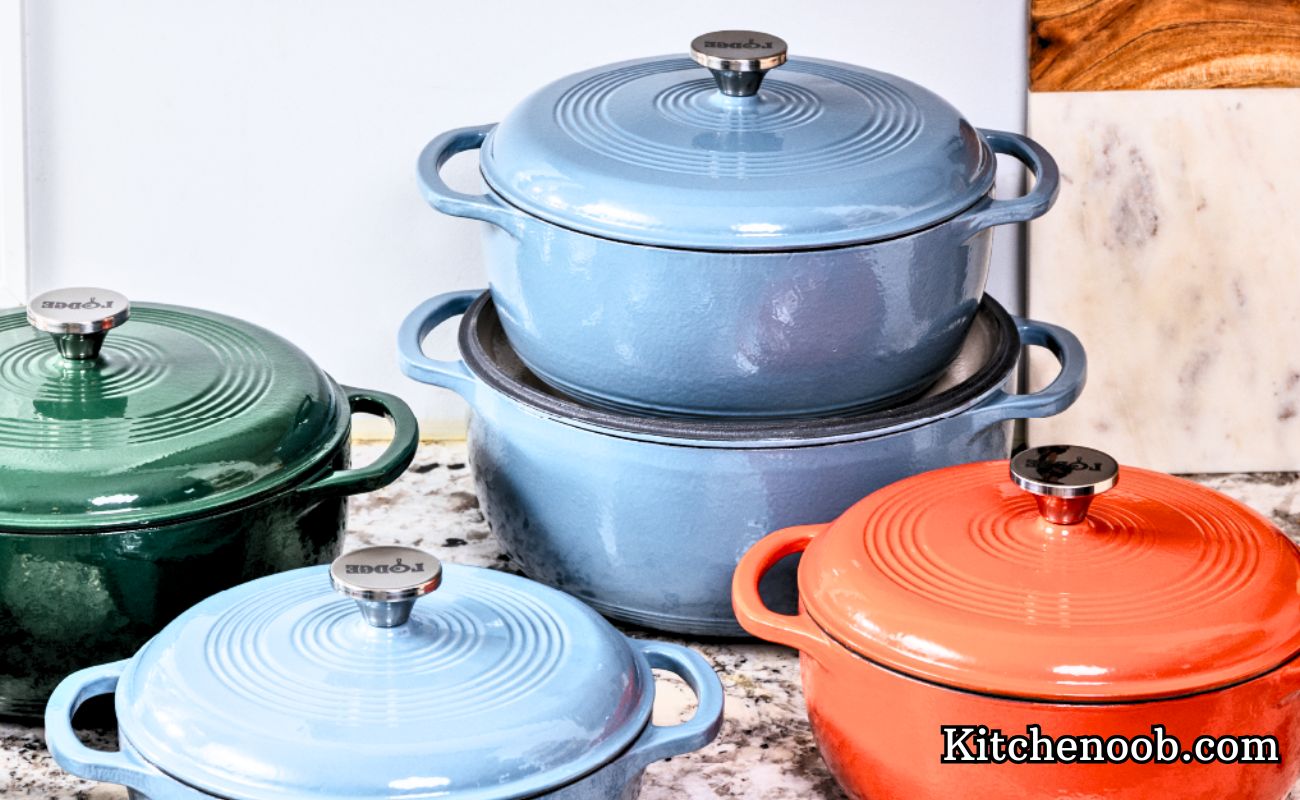
A Dutch oven is a thick and durable pot with a lid. These pots are handy cooking tools that people have used for a long time to make different kinds of food. These are ideal for slow-cooking, soups, stews, camping, sauces, and more. Dutch ovens come in different materials and styles.
You’ll find Dutch ovens made from cast iron, enameled cast iron, aluminum, and ceramic. Traditionally, they were made only from seasoned cast iron. Before we talk about how to use them, let’s clear up a common misunderstanding:
Are Dutch ovens and French Ovens the same?
It is a major misconception among home cooks. These two types of pots are not the same. The main difference is in their insides: Dutch ovens are usually made of cast iron, while French ovens have an enamel coating. There are also other differences between them. I hope this clears your misconception.
Dutch Oven Types
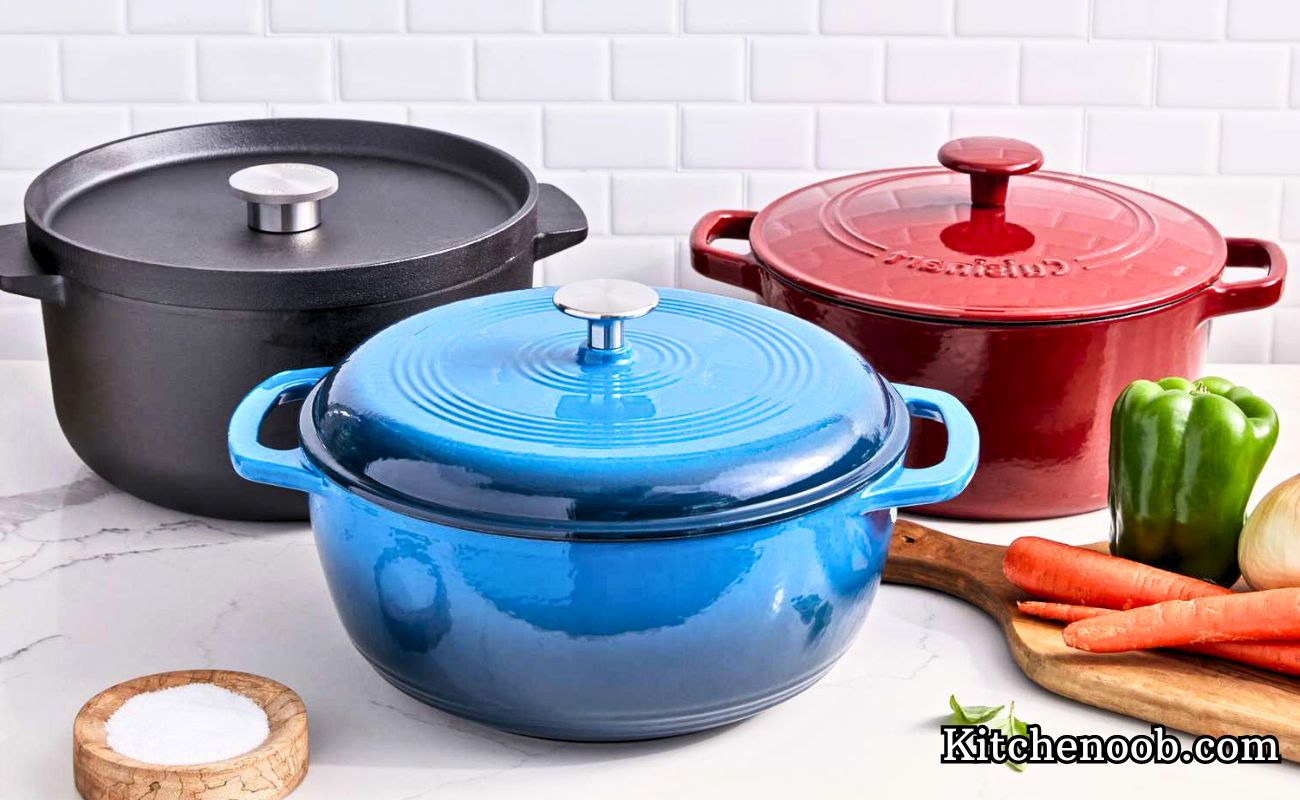
Mostly, all Dutch ovens have the same shape, but they have different colors, sizes, and materials. Some common types you’ll find on the market are:
Bare cast-iron Dutch ovens: This type is perfect for rugged uses. Bare cast-iron Dutch ovens are great at holding heat for a long time, making them perfect for slow cooking at low temperatures. However, these Dutch ovens require timely and adequate maintenance. You cannot throw them in your dishwasher. Instead, their delicate surface requires special and thorough cleaning. With proper cleaning and care, these can last you a lifetime.
Enameled cast-iron Dutch ovens: Technically, these are French ovens—let’s not get into the debate about it. These have become quite popular in present times. They have all the benefits of traditional Dutch ovens, but they’re easier to take care of. Further, their durability, versatility, functionality, and appealing looks can’t be ignored. The one drawback of these types is that they are more expensive than the others.
Ceramic Dutch ovens: Ceramic Dutch ovens are great for beginners. They are lighter than other types, making them easier to handle. They offer almost all the benefits of the traditional and enameled cast-iron Dutch ovens. However, their durability is not the same. Also, they aren’t the safest to use at very high temperatures.
Dutch Oven Maintenance
The best way to clean Dutch ovens is right after you use them, just like other cast-iron cookware. Cleaning is quick and easy—just use boiling water and a soft brush or sponge. Always store your cleaned and oiled Dutch oven in a dry place with the lid on, but don’t seal it completely. Leave a little space for air to help remove the smell of oil.
What is a Dutch Oven used For?
If you don’t have a high-quality Dutch oven in your kitchen, it’s time to get the one without thinking twice. The unit is great for all kinds of recipes, and you can use it on the stovetop and in the oven. Here are some ways to use your Dutch oven:
Soups and stews: Dutch ovens are the perfect choice for slow and low cooking. Thus they are ideal for preparing for the meaty soups and stews, especially in chilly winters. Plus, they can hold a large quantity of soup or other liquids.
Braising meat: Dutch ovens are made up of premium material that heats up quickly and evenly. They hold heat well, so you can braise meats and vegetables perfectly.
Bread-making: The Dutch ovens have much thicker walls and heavy lids that are perfect to create a steamy situation. So you can safely use them to keep dough fresh and moist.
Camping: Yes, you can also use some Dutch ovens for outdoor cooking! They are also great for use over open flames or a campfire. Check out our buying guide for the Best Camping Dutch Ovens! In addition to the above-mentioned uses, you can also use them for cooking rice, grains, potatoes, fried foods, and more.
Read more: Best Camping Cookware
Which one should you Buy?
Le Creuset:
Le Creuset is a well-known cookware brand that’s more than just a regular brand. It offers a wide range of high-quality French cookware. Since it started in 1920, it has built a strong reputation. Le Creuset Dutch ovens are high-end options. They come in bright and bold colors and have a classic, elegant look. It’s not just about the cookware’s appearance; in terms of cooking, these are the first choice of many professional chefs across the globe
Staub:
In simple terms, if Le Creuset is the “Mercedes-Benz” of cookware, then Staub is the “BMW” of cookware. The Staub Dutch Ovens are incomparable when it comes to slow-cooking of meat and vegetables. Furthermore, these are also the best for simmering hearty stews and delicious soups. For overall cooking, Staub is the best cookware brand on the market. Plus, it is simple to maintain well. As for aesthetics, usually, Staub’s cookware is sleeker and features a sophisticated style
Dutch Oven Tips
To acquire the maximum benefit from your Dutch Oven, here are some pro cooking tips for you:
- Always clean and dry Dutch ovens immediately after cooking in them.
- Don’t allow water to sit in it, or don’t expose it to water; otherwise, it can catch rust.
- If using a Dutch Oven on coals or a campfire, ensure that it is filled with water or foodstuff before placing it on fire or coals. And keep monitoring the heat. An empty Dutch oven can ruin its seasoning quickly.
- The main benefit of a good Dutch oven is that it lets you create layers of different flavors in your dishes.
- Your Dutch oven’s shiny, enameled surface may look nonstick, but it’s not as smooth as you might think. So, don’t hesitate to use oil or butter when preparing meals in a Dutch oven.
- A Dutch oven stays warm much longer and even after you remove it from the heat source. Hence you can benefit from it by using it as a serving pot.
- Dropping a Dutch oven will be a total loss as it can break or crack more quickly and more easily than you think!
Leave a Reply